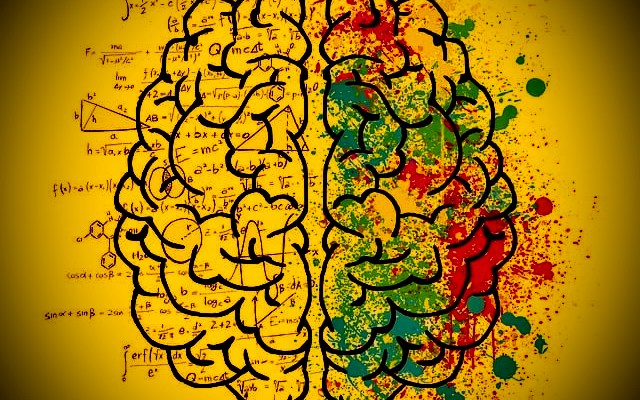
Where would you get inspiration to write?
To me, spontaneous inspiration comes at the strangest of moments: just as I’m drifting to sleep; the moment I’m getting off a train with a heavy suitcase; just as I’m paying for my bus ticket; the moment my phone rings and it’s an old friend I can’t ignore; and just as a migraine starts to distort my thinking. Those and other tricky moments are really hard to catch. In most cases, I take a mental note of the idea “surely I’ll remember this one. It’s my best idea yet!”, before the idea dissolves into an unrelated dream, a busy train station platform, a moving bus, an excited phone line, or a debilitating migraine – by the end of which the idea has transformed into cosmic energy, dark matter, or such unfathomable phenomena.
Intentional inspiration, on the other hand, is not impossible to conjure. Various writers talk about techniques to summon the Muse – using prompts, going for a walk, doing repetitive meditative tasks like cooking or swimming, stimulating senses in various ways, and so on. That all might work. But the main issue for me personally is a balance between chasing inspiration, and being open to it. My Muse is very moody. She comes, teases, and disappears in small windows of time; sometimes disguised as something else, even as distraction.
Some writers talk about how a mental state can block inspiration. Julia Cameron (in The Artist’s Way), for example, talks about a Logic brain (or survival brain) whose job is to identify threats and prevent potentially dangerous actions, and Artist brain (the playful inventive child in everyone of us), which is the engine behind creative risk taking. Cameron recommends Morning Pages to start the day – 3 pages of stream of consciousness to get all serious stuff, non-creative limiting thoughts (negative or otherwise) out of the logic brain and out of the way so the artist brain can come out and play.
Morning pages have worked for me. I understand how a certain state of mind can be limiting. But sometimes I wonder whether negative feelings and thoughts generated in a logic brain can also be harnessed creatively. I wonder whether it’s less about survival, and more about giving ourselves permission to be free – with or without a perceived threat? Or are we really that programmed or programmable?
In an attempt to engage sensory stimulation and connect my senses to my core programming, I extended morning pages practice in ways that others might have also tried. Here’s the deal. I thought, if engaging senses is a way to stimulate, and if survival brain draws its warnings of threat from sensory stimulations too, then perhaps I can talk directly to it in a language it understands, i.e. through senses. So in my morning pages, I wrote directly for my eyes to see, and I spoke for my ears to hear: “everything is fine. I am fine. There is no threat”, hoping my survival brain would register and relax. What was meant to be a list of quick stimulating phrases turned into this:
What are you trying to do, brain? Protect me from previous experiences, damage not to repeat? But hey, brain, you and I have created those experiences too, so calm down. I’m not in danger. The only threat there is now is to keep thinking those thoughts. So, stop it! I don’t want to ignore you of course, but I want you to see this: I AM FINE. No need to turn everything over and over again to remind me. I know. I was there. And now it’s over. So stop it, stop trying to drag me there. It’s only causing more damage, even to you. Can you see these words? Good. So let me go through the day like it’s my first day – and don’t you dare register any alarms! Let me explore my existence, no threats, just the joy of living, Ok? You just take note of joyful moments and save those, Ok? That would be massive help. This wasn’t meant to be a letter to you, but while we’re here, might as well. After all you are my existence, and you have just as much right to hear & see this as any other part of me. So, thank you, brain, let’s now dance happily, today.
I wondered, then, whether I was developing some kind of personality disorder! But, since there’s been no response from either my brains, I think I’m OK. I am fine. Everything is fine.
Now, let’s create…
